
Beschreibung
Nicole Oresme und der Frühling der Moderne
The origins of our modern quantitative-metric strategies of appropriating the world and of modern consciousness and scientific culture
by Ulrich Taschow
1001 pages, 4 books in 2 volumes, paperback, numerous illustrations and diagrams, series: avox ad fontes, ISBN: 978-3-936979-00-8.
International web presentation of this book at www.nicole-oresme.com.
“An exciting search for the origins of our consciousness and our Western culture, with a wealth of historical discoveries and new scientific theories.”
In the tradition of such groundbreaking historians of science, culture, mentality, and psychohistory as Pierre Duhem, Anneliese Maier, Marshall Clagett, Michel Foucault, Johan Huizinga, and Julian Jaynes, the author undertakes a captivating search for the medieval beginnings of our consciousness and of modern Western culture.
Through the profound analysis of the writings of Nicole Oresme, the Einstein of the fourteenth century, and of other medieval authors, he succeeds in making spectacular discoveries within European scientific, cultural, and psychological history, which he suggestively connects in a successful interdisciplinary synthesis with surprising conclusions.
Cover text:
What are the essential characteristics of our Western culture, and what are the determinants of its development? What accounts for its global singular path since about the eleventh century? Why, and since when, have we measured, quantified, and rationalized the world? How old is the idea of progress, and where does it originate ...?
The author unites the fundamentality of Pierre Duhem, the argumentative meticulousness of Anneliese Maier and Marshall Clagett, the provocation of Michel Foucault, the sensitivity and speculative power of Johan Huizinga, and the eloquence of Umberto Eco in his exciting search for the beginnings of our modern Western culture, forming an original synthesis.
The profound interdisciplinary analysis of the extensive work of Nicole Oresme, probably the most original thinker of the fourteenth century, serves as a rich guiding thread. What this book brings to light from forgotten treasures of European scientific, cultural, and psychological history must seem quite incredible to the uninitiated.
From the medieval anticipation of modern information, systems, and chaos theory; the theory of self-organization; the discovery of complexity, indeterminacy, and the infinity of the world; the wave mechanics of sound and light; and the partial-tone theory of the nineteenth century, to the psychological discovery of the unconscious and of the constructive and subjective nature of perception, it had all already been thought before.
The anticipation of H. von Helmholtz’s theory of unconscious perceptual inferences, and even the first formulation of a modern theory of cognition, psychocybernetics, and a psychophysics in the sense of G. Th. Fechner, are likewise found here. These late-medieval innovations are outshone by a frenzy of quantification that far eclipses the later “scientific-technical revolution.”
Since then, it seems, nothing fundamentally new has been added. On the contrary, in the following period up to the end of the eighteenth century, losses of knowledge in many respects begin to draw a dark veil over the West ...
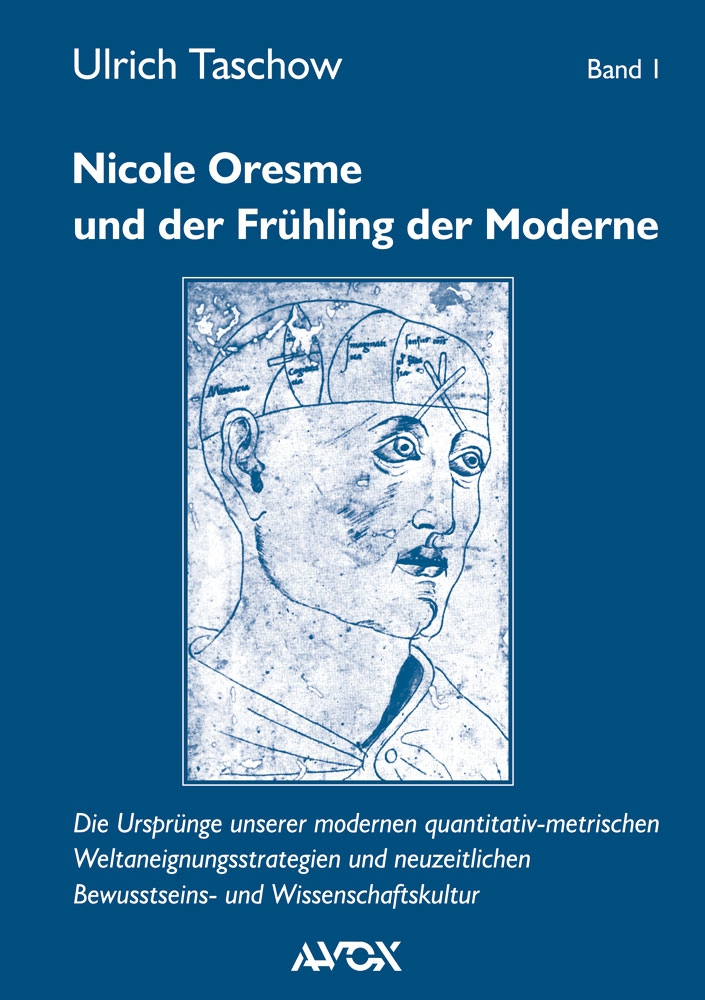
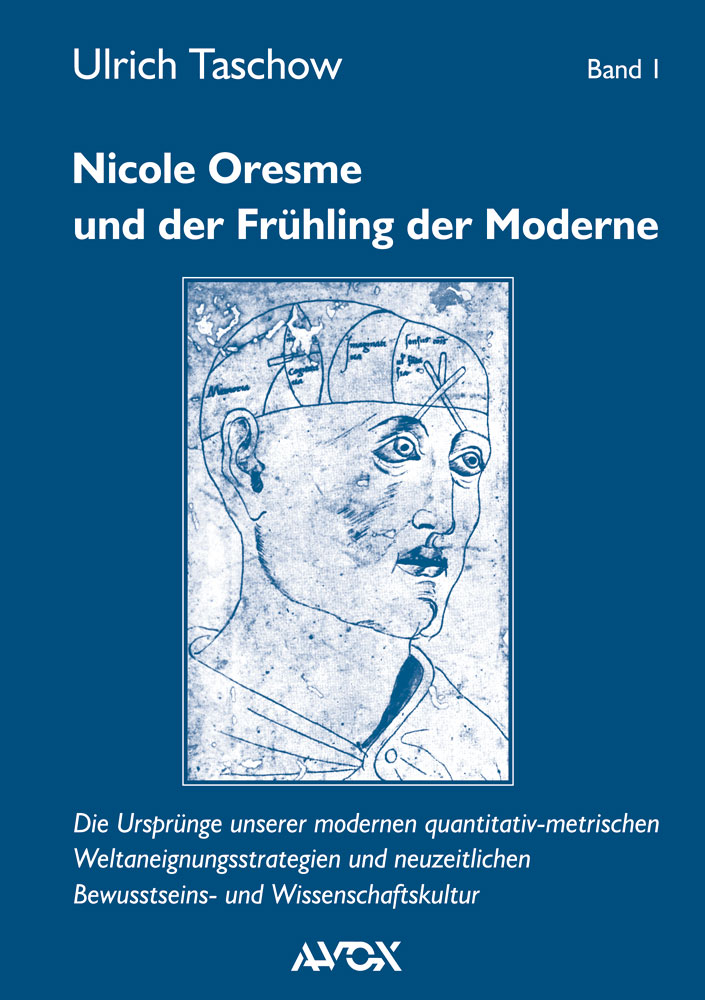
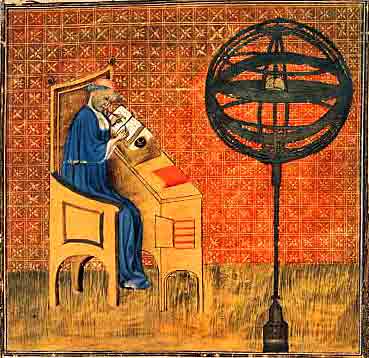 Portrait of Nicole Oresme from his Traité de l’espere,
Bibliothèque Nationale, Paris, France, fonds français 565, fol. 1r
Many of these medieval insights anticipating the self-understanding of modernity are, in a way unusual for present-day thinking, most closely linked with the model of music. Musica functioned, as it were, as the computer of the Middle Ages and in this sense formed the all-encompassing hymn of that new quantitative-analytical consciousness.
These “untimely” late-medieval anticipations, together with a large number of striking psychohistorical and mental-historical phenomena from that time up to the present, lead the author, with the inclusion of the revolutionary findings of the psychologist Julian Jaynes, to a fundamental revision of inherited models of history.
With his theory of evolutionary consciousness, the study culminates in a new explanatory model for the emergence and global special position of Western culture. Consciousness, according to this view, is not a biological endowment but a sociocultural achievement, subject to powerful historical change and perhaps capable of disappearing again.
By setting up an entire complex of previously unasked question marks, the work shows how little we actually know about our history. This groundbreaking book, a point of no return, makes a comprehensive discussion urgently necessary.